Valerio Adami, Carlo Alfano, Nanni Balestrini, Stefania Carlotti, Francesco Clemente, Cheryl Donegan, Peter Fischli, Sylvie Fleury, Elisa Giardina Papa, Thomas Hirschhorn, Ilya and Emilia Kabakov, Sean Landers, Rosa Panaro, Giulia Piscitelli, Pipilotti Rist, Grazia Toderi, Lorenzo Scotto di Luzio, Jordan Wolfson and Lorenzo Coletta with Amin Dolcezza (former De Cupis & MIIN- – -AMOR), Contropotere, Radford Electronics, Renato Grieco. The exhibition also features a sound piece by Hira Nabi, which is part of Soundshapes—a curatorial project by Carolin Köchling and Julia Grosse.
The ongoing exhibition format of Gli anni is organized into chapters and dedicated to exploring episodes from recent decades of Neapolitan art history. The Madre collection thus engages with major public and private collections—primarily from around the city—to evoke moments and artistic productions that have left their mark on this region through emblematic works. The title Gli anni refers to the novel of the same name by writer Annie Ernaux (The Years), winner of the 2022 Nobel Prize in Literature, in which the description of photographs and the memory of significant moments in a single life come together to form both an autobiographical fresco and a collective chronicle. The novel ponders how private images and memories are destined to dissolve into the flow of history; the exhibition, on the other hand, proposes considering works of art as an antidote to this disappearance. Having transcended the urgency of the present in which they were conceived, the works continue to narrate not only their own aesthetic and linguistic exploration but also the context in which they were produced and exhibited. Likewise, the collections that house them may be viewed as repositories of stories, events, and layers of a shared memory.
Like the structure of memories, the narrative developed in each chapter of Gli anni does not follow a linear chronological progression, but is organized around various moments and episodes, described by posters outlining the years in which the works selected were first displayed in Campania. With this third chapter, Gli anni takes on an even more widespread configuration throughout the museum spaces, involving not only the second floor but also the entrance, the Sala Madre, and part of the Sala Colonne, following a logic of movement that transforms the institution into an expansive, non-hierarchical exhibition space.
Thanks to a research process refined with each passing chapter, Gli anni identifies works that are not only of extraordinary historical and artistic significance but are also capable of offering multilayered interpretations that still resonate deeply today with the cultural, social, and geopolitical transformations of recent decades. In the first chapter, for example, Luciano Fabro’s work Nord, Sud, Est, Ovest giocano a Shanghai (1989) marked the Capodimonte Museum’s opening to contemporary artistic research, while at the same time—right from the title—highlighting the political tensions of a symbolic year in the late 1980s. In the second chapter, the presence of Rashid Johnson—then at the beginning of his career and now among the most widely recognized figures on the international scene—highlighted the pioneering nature of the work carried out by galleries such as that of Francesco Annarumma, while bringing the issues of Afro-American culture and history to the forefront. Continuing this line of inquiry, the third chapter includes works that bring to light the fissures of conflict that continue to shape the present, from Europe to the Middle East, such as The Sick Child by Ilya and Emilia Kabakov—exhibited in 2000 at the Lia Rumma Gallery—which reflects on the fragility of childhood, the body, and memory through a staging deeply rooted in the Soviet social and cultural context where the two artists were born; and The Green Coffin (2006) by Thomas Hirschhorn, an environmental sculpture first exhibited at the Alfonso Artiaco Gallery in 2006, which explores the relationship between art, commemorative ritual, and public space, depicting the coffin of Palestinian political leader Yasser Arafat being lifted by a multitude of hands.
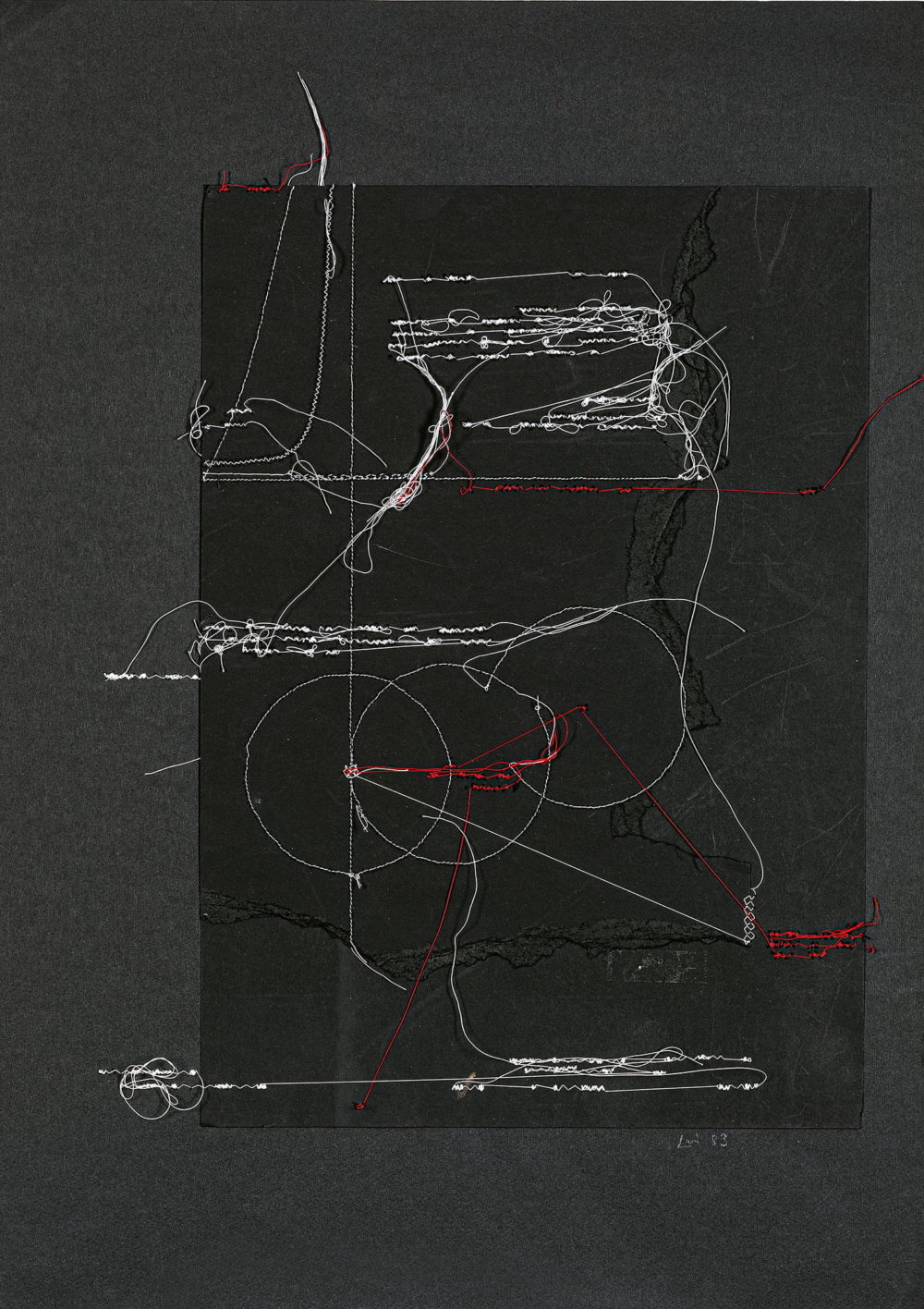
Gli anni continues the effort to showcase the Madre collection, from which works such as the large canvas by Francesco Clemente (which the artist donated to the museum in 2009) and the installation by Carlo Alfano (conceived for his solo exhibition at Lucio Amelio’s Modern Art Agency in 1970) have been selected. At the same time, the exhibition demonstrates how the collection is being expanded with new acquisitions presented here to the public, such as Cool Memories (2023) by Lorenzo Scotto di Luzio (previously included in Gli anni. Capitolo 2) and She Flickered In and Out of History (2026) by Elisa Giardina Papa, which became part of the collection after having won the PAC [Plan for Contemporary Art] (2024) and the Italian Council 13 (2024) calls for proposals issued by the Directorate General for Contemporary Creativity of the Ministry of Culture. Joining these is Jiem-No-Piedti (2005) by Jordan Wolfson, exhibited for the first time in Naples at the T293 gallery, and now acquired through a private donation.
As in every chapter, a Neapolitan artist is also invited to study the Museum collection and curate a room of their own based on a personal selection of works drawn from it. For this iteration of Gli anni, Lorenzo Coletta selects the work Tristanoil (2012) by Nanni Balestrini and places it in dialogue with the practices of sound artists from various generations, offering a reflection on the possibility of imagining profound temporalities and realities that transcend human centrality.
One of the new features characterizing the third chapter of Gli anni is the growing focus on artistic and curatorial practices engaged with the present, underscoring how the museum cannot be understood solely as an archive of memory, but as a living, evolving organism. This perspective is reflected in the inclusion of internationally renowned artist Peter Fischli—here in his first exhibition in Naples—and Stefania Carlotti, also exhibiting in the city for the first time, as well as the project Soundshapes, curated by Carolin Köchling and Julia Grosse, which brings a previously unseen work by artist Hira Nabi to Madre.
Gli anni. Capitolo 3 also devotes particular attention to experimentation with artistic languages and the interdisciplinary dimension. The exhibition presents a reconstruction of the video art exhibition Audience 0.01, curated by Helena Kontova and held in 1993 at the Vera Vita Gioia gallery, which explores new approaches to video art in the 1990s, highlighting a significant gender perspective through the ample space devoted to the work of female artists. One room is dedicated to the magazine Collant. I giorni dell’arte attuale: a project that was both artistic and editorial, launched in the mid-1990s by Giuseppe Migliore, known by his stage name Argento, recounted through the perspective and private archive of Giulia Piscitelli. Finally, a collection of works recreates the project developed by Valerio Adami, who was invited in 2003 to design the sets for The Flying Dutchman at the Teatro di San Carlo, which (thanks to generous loans from the Fondazione Teatro di San Carlo – Historical Archive and MeMus Museum, the artist’s archive, and the Nouveau Musée National de Monaco) highlights an extraordinary moment of dialogue between the visual arts and theater within the Neapolitan cultural tradition.
In continuity with the previous section, the works of fundamental historical and artistic importance by Rosa Panaro—previously included in the exhibition alongside those by Alfano and Scotto Di Luzio—appear once again in the exhibition itinerary.
To ensure that each work becomes not only an emblem of artistic exploration and a specific historical and political moment, but also an antidote to the dispersion of shared memory evoked by Ernaux, the exhibition identifies the public program as a constitutive element. During the exhibition period, meetings, conversations, and tours bring to life the vibrancy of the Neapolitan art scene in recent art history, situating it within a broader historiographical perspective. The works on display thus become a framework upon which to construct historical-artistic, political, anthropological, and sociological narratives, in line with a conception of the museum as a place for the production of transdisciplinary thought.